Getting Started in Game Development
Hello Coders! 👾
When I gave talks at conferences and while speaking with people at meetups, I get sometimes asked how to get started as a game developer. Even people that straight out ask how to get as good as I am. First, I think this is really overrating me, as I don’t consider myself a particularly good game developer, but I guess I earned my stripes and probably suffer from some imposter syndrome. My first answer, a bit jokingly, is to just start and do it for 25 years. Which is actually the truth. The only way to get good at anything is to do it. Practice it. The weird thing is that with software and game development, people expect to somehow watch a few videos and be good at it. With learning anything, you need to start small and practice. Personally, I won’t get into a plane when the pilot told me he started a couple of weeks ago and watched a few videos, so we will be fine as he knows what the buttons do. You can’t learn from just watching a video or just reading some texts. You’ll have to actively do it. No matter the skill. Playing the guitar, juggling, flying a plane or developing a game.
How I got started
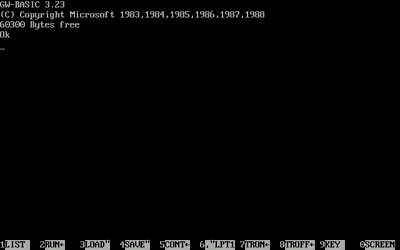
I started writing software in 1992 when I was 12. We got our first computer, and while exploring the device, I found
this little tool called “GW-Basic” in which you could write some sort of text, and then you can let the computer do that.
This somehow really intrigued me. We didn’t have internet at home yet. But at our local library I found a book teaching
programming in Basic by writing little games. One of my first games was a game where the player, a ! , needed to stay
between two * that randomly moved left and right. By printing this on a new line over and over, the game started
scrolling when the bottom of the screen was reached. A basic game depicting racing in a car. But no matter how simple
this game was, it did teach me the very basics of controlling a character, controlling the road and handling the
interaction between the two in a game loop.
Thoughts on AI
Vibe coding a game when you have never built a game before and know nothing about writing software is not going to magically teach you how to build games. Yes, you might be able to create some sort of game. But don’t expect it to be a good game.
You can use Copilot, for example, to explain code to you. But if you want to learn to create games and write code, my advice would be not to let it write the code for you. You can ask if it can review your code and what improvements could be made. Make sure, though, to also ask ‘why’ to understand why this would be an improvement.
Building Small Games
There’s some discussion if building small games is good or bad. When getting started, I definitely would suggest building tiny games and starting new ones often. No matter how much experience you have, after a few weeks or months you look back at code you wrote earlier and wonder why the hell you wrote code that’s that bad. The great thing about building something small is that you get through the entire process of building something. There’s a rule in software development, the 80/20 rule, which states that you do 80% of work in 20% of the time. This means that you always need a lot more time than you think to get something really done. A nice way to work with a deadline when building games for fun is joining a game jam. This doesn’t mean you have to lock yourself in a room for 48 hours and neglect everything else; there are a lot of jams taking place over a longer period. I’ve done a bunch of them over the years, all of them taking at least a week to a month.But the great thing is that it teaches you to get something done.
The Harsh Truth
Don’t look at the very successful indie game developers and expect this to be you soon. Similarly, you won’t listen to Jimi Hendrix and expect to play his solos after a few lessons. Practice, practice, practice. Build games, experiment and have fun.
Happy Coding! 🚀